Before I launch into the 2010 predictions, I want to share the grading from last year, and the cumulative grading over the last four years. (I will be posting the 2009 predictions, with grades, on our blogsite, www.abrightfire.com, in a few days.)
This year we had one problem, which has come up before: one prediction – the first one – depends upon full-year sales data for entertainment and gaming software, so we have to call it “undecided” until the Q4 numbers are in.
For that reason, I figured out averages as if this call were either 100% right or wrong. Our results from 2009 are then 90-100% correct; and, for the cumulative period, the total correct to date are therefore 95-97.5%.
No doubt, it will be very hard to keep those numbers up.
Finally, I would like to share with members what I mentioned at the dinner about this year’s calls: unlike in past years, this year’s predictions seem at one and the same time more obvious, and yet more bold. The building blocks are generally trends we all have noticed already, but the conclusions are often counter to what the press, and perhaps SNS members, have been assuming.
And therein, of course, lies the controversy.
Top Ten Predictions for 2010:
1. 2010 will be The Year of Platform Wars: netbooks, cellphones, pads, Cloud standards. Clouds will tend to support the consumer world (Picnik, Amazon), enterprises will continue to build out their own data centers, and Netbook sector growth rates continue to post very large numbers.
2. 2010 will be The Year of Operating System Wars: Windows 7 flavors, Mac OS, Linux flavors, Symbian, Android, Chrome OS, Nokia Maemo 5. The winners, in order of unit sales: W7, Mac OS, Android. W7, ironically, by failure of imagination and by its PC-centric platform, actively clears space for others to take over the OS via mobile platforms.
3. All content goes Mobile. Everything gets tagged and multi-channeled, and the walled gardens open up. TV and movie content, particularly, break free of old trapped business models. We are moving toward watching first-run TV and movies on phones, for a price. Which leads to No. 4.
4. Mobile Apps and Mobile Content drive micro payments, which move from niche to mainstream payment models. Payment for content will split along age lines, at around 35; above, pay; below, don’t pay.
5. The Phone vs. the PC: a split along two paths (enterprise vs. consumer):
a. Fully integrated user experience, poor back-end (mail and calendar services, etc.) integration; the Apple environment.
b. Splintered user experience, like WMobile vs. WPC, with integrated back-end.
c. Windows sells integration in the plumbing, Apple does it on the screen.
Note: The phone is now the most interesting computer platform, and it is driving innovation: software, business models, distribution. Netbooks are next up as drivers.
6. There will be a Cloud catastrophe in 2010 that limits Cloud growth by raising security issues and restricting enterprise trust. CIOs will see the Cloud as the doorstep for industrial espionage.
7. A huge chasm opens in computing, between Consumer and Enterprise (government/business), with Apple, Google, and most Asian hardware companies in Consumer; and Dell, IBM, Cisco, and MS on the Enterprise side. HP will straddle both. Before 2010, talk was all about unifying consumer and enterprise. Now, talk will be about their split.
8. Microsoft loses in its Consumer play: except for gaming, it is Game Over for MS in Consumer. This will make Consumer the place to be, where the most robust and exciting change artists will work.
9. News media that survive will move to the subscription model, in whole or in part, along age lines. (See No. 4.)
10. Connecting remote data to people and things in real time will lead to a series of exciting new devices and applications. Possible examples: real-time comparison and recipe-driven shopping, facial recognition (in social spaces) linked to bios, self-guided tours by phone, voice-queried information about your personal environment. Many of these are technically proved out today, but they will start to emerge as an exciting and brand-new trend in applications in 2010.
You likely personally disagree with some of these, or would like to see them expanded; please feel free to write in with your thoughts, and I’ll do my best to address them. Of course, in the end, all that matters is not who said what, but whether they turn out to have been correct a year from now.
To hear a complete MP3 recording of this event, members may go to:
Your comments are always welcome,
Sincerely,
Mark R. Anderson
Upgrades
» The U.S. Federal Trade Commission Files Antitrust-Related Charges vs. Intel
Here is the text of an SNS Special Alert sent to members on Wednesday, as this news was announced:
To All SNS Members:
As predicted earlier, the FTC this morning filed suit against Intel for monopolistic antitrust-like behaviors.
Specifically:
“Over a period going back to 1999, at each stage at which Intel’s dominance in various chip markets has been threatened, they have responded, rather than by competing aggressively on the merits, with a course of conduct that has been exclusionary and detrimental to competition and consumers.” – Richard A. Feinstein, director of the FTC’s Bureau of Competition, at a news conference, after filing antitrust charges against Intel this week; quoted by the Wall Street Journal. From this week’s SNS Technology Letter.
Intel continues to deny its guilt, and has hired a first-water antitrust lawyer, Douglas Melamed, as new general counsel, to help get it through the next few years of litigation. The chipmaker is currently facing antitrust charges by the New York Attorney General, antitrust-related charges by the Federal Trade Commission, an appeal on an antitrust conviction in the European Union, a civil suit by graphics chipmaker Nvidia, and hundreds of class-action suits. Doug will have his hands full.
I believe the consequences of this filing are several:
First, those who thought the worst of times in court for Intel were over with the EU conviction will no longer feel such optimism; if anything, the worse times now look to be ahead.
Second, Intel’s continued Mad magazine defense (“What, Me Worry?”), in public at least, will no longer wash. When will shareholders get mad? When will the board do its duty? When will a single person at Intel take responsibility for really, really screwing up? This is a PR nightmare.
Intel has become dysfunctional, and the world is trying to send it a message. Even now, its response is a bunker mentality: bring me more guns and lawyers.
I believe that Intel will lose (or settle, unfavorably) both its NY and FTC suits. Perhaps more important, the company will now be in the U.S. press on a regular basis, as evidence is made public of its various misdeeds vis-a-vis competitors and customers (and even consumers) over the last decade or so.
Finally, the worst news of all: Intel’s management seems to be in complete denial, after global convictions on the same issues. Everyone else is wrong, and they are right, even after the courts have spoken. Are they so out of touch with reality? Is this company just plain broken?
None of this will be good for Intel or its shareholders. This is a shame, as the business side of its operations faces serious upside potential. Given the volatility that comes with ongoing public courtroom revelations, I would recommend staying away from the stock.
Mark Anderson
CEO
Strategic News Service
Disclosure: I am an owner of Intel stock, and do not short. This message, if anything, will hurt my private position.
Quotes of the Week
“I bought my first stock in 1942, and this roller coaster surpassed anything that I’ve seen. We didn’t do all the smartest things. We didn’t do anything really dumb.” – Warren Buffett; quoted in the Wall Street Journal.
“Over a period going back to 1999, at each stage at which Intel’s dominance in various chip markets has been threatened, they have responded, rather than by competing aggressively on the merits, with a course of conduct that has been exclusionary and detrimental to competition and consumers.” – Richard A. Feinstein, director of the FTC’s bureau of competition, at a news conference, after filing antitrust-related charges against Intel this week.
“It is difficult to get a man to understand something when his salary depends on his not understanding it.” – Upton Sinclair, quoted by Paul Krugman in the New York Times.
This has long been one of my favorite quotes; it explains about half of human behavior – and almost ALL of ExxonMobil’s.
Ethermail
Re: SNS: Intel Examined
Mark,
Congratulations on your in-depth Intel opinion piece. I thought it was well researched, well articulated, and very insightful. Apparently, BusinessWeek thought highly of your report also as they have quoted you in an article released today:
Unfortunately, the settlement with AMD risks taking a lot of the teeth out of Cuomo’s and the FTC’s pursuit of appropriately punishing Intel and in changing their behavior. I believe AMD left a great deal on the table in their settlement negotiations with Intel as Intel was approaching the point of desperation/panic. AMD quite possibly could have ended up with 2 to 3x the settlement dollars plus avoided the mediation-only clause.
I hope Nvidia is much more effective in their suit against Intel and that the FTC/Justice Dept still has plenty of desire and ammo left to effectively make Intel play fair going forward – just as they and European authorities did with Microsoft. The goal is to ensure that the consumer ultimately wins in the long-term via serious enforcement of fair competition laws.
Keep up the great work.
John Petote
CEO / Angel Investor
Santa Barbara, CA
P.s. Based upon your recent newsletter edition which was focused on Intel’s growing questionable business practices, I thought you might like to see the below Engadget news quip.
Members abandoning Intel’s MID alliance? Hopefully.
posted Nov 30th 2009 7:17AM
Bad, but entirely expected news on the MID front. You remember the Mobile Internet Device right? UMPCs by another name usually running Linux-variants in that middling ground between smartphones and netbooks that nobody seems capable of making an attractive use-case for beyond the living room sofa? According to DigiTimes, “several members” of Intel’s Mobile Internet Devices Innovation Alliance (MIDIA) have quit development of MID devices due to very weak shipments. Even the promise of Intel’s Moorestown platform has lured “only a limited number of vendors” to launch related products in 2010. Sources claim that vendors will instead refocus on other areas of possible growth.
Imagine that.
John Petote
P.p.s. Thought you might find this BW article of particular interest, Mark:
John,
Even as we watch Intel take the heat for illegal and newly charged antitrust actions, it is interesting to see the other efforts the company has made to control its own destiny. It is, perhaps, the failure of these other, more apparently legal, efforts that may be strengthening the case for bad behavior in internal discussions.
If we look at the company’s record over the last 5-10 years, in terms of new initiatives attempting to bolster, expand, or protect market share, we see a litany of failures. The most obvious, I think, was the collapse of the entire mobile unit, which was then sold off, after years of trying to break into the cellphone arena.
But the story of GPU chips, in the battle with past-partner NVIDIA, and with AMD/ATI, is not so different: the other guys get there first, then Intel wants share (it has about 50% of the GPU market, just by including its own chip in the approved chipset), then it tries to morph into that kind of company.
Take the Intel Classmate. Since I run SNS Project Inkwell, I won’t comment on the device, but the company has been selling or giving these away, apparently at a loss, for years. This certainly prevents anyone else – like its original target, One Laptop Per Child – from getting traction. Who can compete? While, on the surface, it sounds really noble, a little thought leads to the conclusion that a monopolist is using its profits to make sure no new companies surface in this strategically critical marketplace.
If Japan were doing this, or China, we would call it “dumping” and complain to the WTO.
No one has looked into this yet, but I hope someone does.
And then there is the UMPC, a dud.
Followed by Asus’ successful lead and Intel’s misdirected (and horribly named) response, the “netbook,” which has nothing to do with the Net and everything to do with its book-like size.
Even when Intel has a chance to be part of a super hit, like the mini/netbook craze, the company instead markets against itself, and against its own (Atom) chips, falsely noting the limitations of the category (see, it can’t run video) to favor higher-priced chips and boxes.
Dell has been doing the same not-smart thing, which is surprising, and a bad sign. (I should note that Michael emailed me on this subject after our last FiReGlobal interview, and amended his comments: his current statement is that people will own BOTH a mini [netbook] and a laptop. Fine.)
No wonder Intel has put so much money into WiMAX. It is time for a hit, although there is no indication that the board of directors is in anything but a deep, self-hypnotic slumber.
Mark Anderson
Re: SNS: The Age of Consequences
Mark,
You haven’t heard from me, but I am a really loyal reader and fan.
Long story short, I am a country doc who now leads a little not-for-profit up here in Maine that has accumulated a bit of capital and is trying to change the way healthcare is delivered for a small population in our little corner of the world. I am pretty good friends with Angus King, who I think you might remember from his laptop project, and I am an avid sailor and lover of the Maine coast… a number of years ago I really enjoyed your piece on a boat trip on the Kennebec.
I am writing to tell you that I am blown away by this issue of the SNS. You have hit the center of the target in virtually every paragraph.
The question is: how do we organize an intelligent, talented community of committed people to deal with some of these issues effectively?
This is an incredibly important moment.
How do those of us who can see help others to see, as well, and push for constructive change?
You have motivated me to get to one of your events to chew on this question. It feels urgent to me.
Thank you.
David H. Howes, M.D.
President
Martin’s Point Health Care
[Maine]
David,
It’s a pleasure to hear from you. We know Martin’s Point from its serial contributions to our Fixing Healthcare thread at Future in Review, and I would encourage you to sign up now to lead that charge (or at least be part of our panel) at FiRe 2010. We are increasingly focusing on technologies and models that re-awaken the direct relationship between patient and doctor, as this seems to be the best solution all around.
In one stroke, it obviates the need to deal with overcharging, insurance escapades, most legal issues, fake costing, fraud, and plain old bad medicine.
So, I think this patient/doctor re-alignment is a big part of the answer, and would be happy to work with you on expanding the idea, if you find yourself agreeing.
And yes, Angus King is a friend, an early supporter of Project Inkwell, and a great guy all around.
I hope to see you there. Maybe we should invite Angus as well.
Mark Anderson
Mark,
I agree with you that Windows Mobile is a comedy turning into a farce, and that unless WinMo 7 is very exciting, very good and arrives very fast, WinMo is probably dead in the water. But those AdMob stats don’t tell the real story. They don’t reflect handset sales or even data usage; they reflect the number of apps in use with ads in them served by AdMob (<https://metrics.admob.com/2009/10/placing-admob-metrics-in-context/> – based on the ad requests we receive from our network of more than 15,000 mobile Web sites and iPhone and Android applications). There are very few WinMo apps with ads in them; there are hundreds of thousands of WinMo apps without ads.
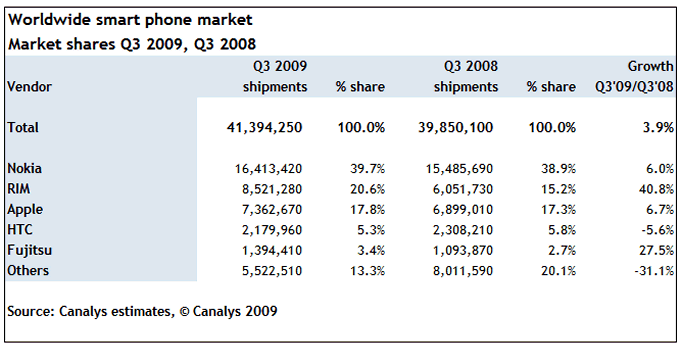
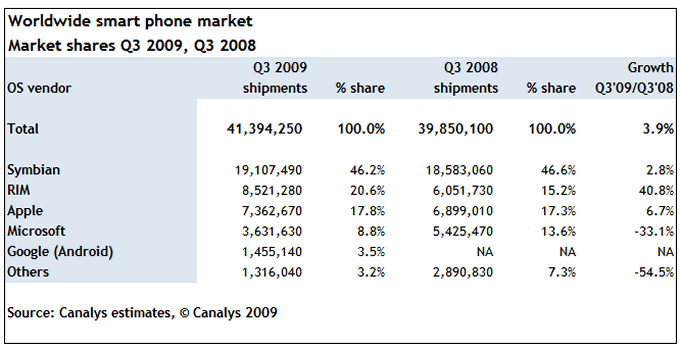
The iPhone, by this measure, is the premiere mobile ad platform; I think that plays more to your law of consequences than it does to the utility or usage of the different platforms. The rather more accurate Canalys figures put WinMo at a still disappointing 8.8% worldwide (stronger in Germany, just as RIM is the #1 in the UK); it’s still down a third, it’s still a disaster for Microsoft – but if ads were the only measure, you could just give the whole smartphone market to Google now…
Canalys:
“Nokia retained its worldwide smart phone lead, with a share of 40% – slightly up on its year-ago position, but down almost 5% sequentially. RIM held onto second place with a largely unchanged (compared to Q2) share of 21%, while Apple reached a new high of 18% share in third, significantly up from the 14% it held in Q2 as supply of the iPhone 3GS improved in many countries. HTC retained its fourth-place position with 5% share.
“Looking at the market by operating system, Symbian’s overall lead shrank as its share fell to 46%, ahead of RIM and Apple. Microsoft remained in fourth with its share dipping slightly below last quarter’s previous low point of 9%. The proportion of smart phones running Google’s Android OS climbed to almost 4%, from just under 3% in Q2.”
All the best,
Mary Branscombe
Technology journalism & consultancy
[London]
www.marybranscombe.com
Mary,
Great letter, and very helpful figures; thank you.
It sounds like you roundly agree regarding MS in phones. In looking around at the figures, the two most interesting things I see are:
1. HTC, losing phone share YTY. I don’t know if I believe it, or if this might come from OEM relations vs. selling its own brand, which it is just starting to get serious about. But I see HTC as perhaps the first- or second-most high-growth maker right now, Apple being the other.
2. A call: Apple will overtake RIM very soon (a quarter or two?) to take the No. 2 slot in smartphone operating systems, and Android will overtake Microsoft. The smartphone world is in great upheaval, and Nokia is in a very strange position, sitting at the top, but, I would think, terrified. With Apple and Google coming, it is not a good time to be losing sequential quarterly share.
Mark Anderson
Mark,
Wow. You sure have gotten a lot of coverage from the NYC event!
I’m pretty sure I told you this, but just in case:
Two or three years ago, I sat through a sance (under NDA at the time) with the guy running Windows Mobile. (He and 3 successors have probably been fired by now...)
He began by presenting his “market segmentation.” Four people: Bob and Carol and Ted and Alice. Two men, two women. An African American, a Hispanic, an Asian, and a Caucasian. Perfect.
Here’s the interesting part, in the context of your remark. Bob worked for a big company. Carol worked for a medium-sized company. Ted worked for a small company. And Alice was everyone else.
Ed Lazowska
[Bill & Melinda Gates Chair in Computer Science & Engineering
University of Washington
Seattle, WA]
P.s. Re: [Your comment about Microsoft needing to] “Get out of Dodge” [in the consumer markets]:
It was even funnier/sadder, because the next day we had a presentation for the then-Mr.-Zune. His story was “Zune is no longer a device, it’s a service, and we will reach people through all sorts of devices, like phones.”
Great, except not Windows Mobile phones, I guess, because not only does Alice buy 90% of all phones, she buys 98% of all downloaded music.
Ed
Ed,
It sounds to me like Microsoft had better create a whole new division just for Alice.
In fact, when Steve Ballmer made CEO, his very first action was to trundle on over to Red West and fire most of the (consumer online) team there. Remember the MS’ online venture called “Underwire”? Not pretty.
It is probably best to stay with Steve’s comments then about doing the world’s plumbing. It’s a great gig – or it was.
Mark Anderson
SNS TakeOut Window
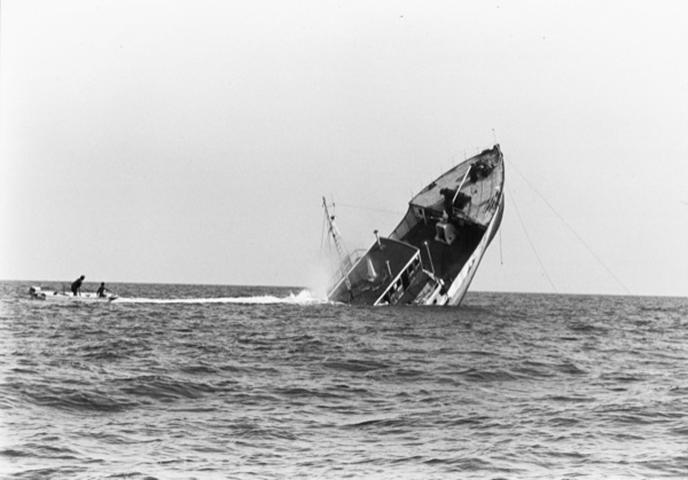
SNS Member Paul Watson and his Sea Shepherd crew reversed position on the Shonan Maru No. 2, the Japanese harpoon boat assigned to trail them, by dodging around an ice floe; at 2pm Monday the surprised Maru crew opened up with water cannon. No one was hurt. (The photo below shows similar interactions with a sister ship.)
The Japanese PM has complained to Australian PM Kevin Rudd about Watson’s behavior, and Rudd has responded that Japan needs to stop its whaling activities. Nice going, Paul.